As autumn draws to a close, dairy farms across New Zealand enter one of the most logistically demanding periods. Milking winds down, cows are dried off, and livestock movements increase as they head to winter grazing or run‑off blocks. This can sometimes be to another farm entirely, and even between the North and South Islands.
How does this relate to transport? This seasonal shift sees a sharp increase in livestock movements, with tight timeframes and little room for error. The logistics of all of this are enormous.
For farmers and transport operators, well managed transport is what keeps everything on track.
Winter grazing and the cost of inefficiencies
Once cows are dried off, many herds are moved off milking to manage feed supply and pasture recovery. These moves often take place over several days or weeks and can mean long‑distance travel.
For transport operators, this period quickly becomes a juggling act, especially with livestock involved.
When systems rely on manual processes, the pressure builds fast.
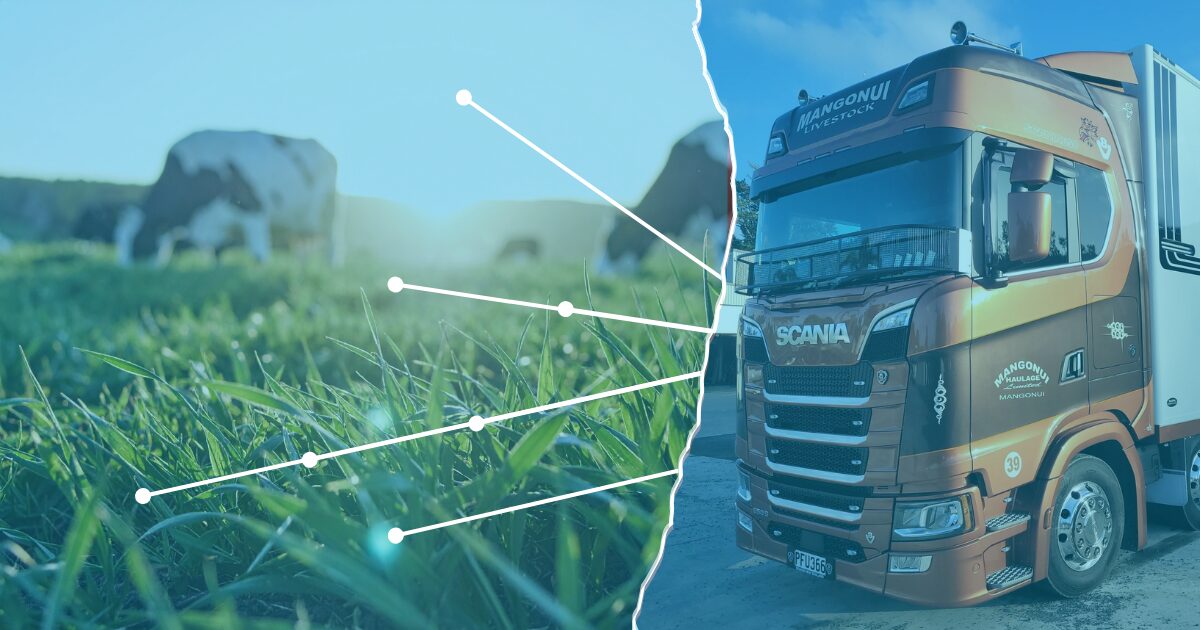
Sean Sparksman from Mangonui Haulage in Northland explains, before moving to MyTrucking they relied on a manual diary system:
“The amount of writing and paper to keep track of, and any changes to jobs, meant everything had to be re‑written.”
That kind of system simply isn’t robust enough during this season.
Murray Bros, a Taranaki‑based livestock transport operator, had similar challenges. Daily job sheets were handwritten and handed out to drivers on the day of the job. Any changes had to be made manually (with Twink pen) or the driver had to be called to let them know.
The importance of visibility when things change
Moving winter stock is rarely a single, straightforward trip. It often involves multiple properties and people.
Mangonui Haulage highlights the positive impact of having job details visible in one system, thanks to MyTrucking.
“Swapping trucks around or changing dates is easy and everyone knows what is going on.”
For farmers, it means less confusion on the transport side; leading to fewer delays, fewer follow‑ups, and greater confidence for everyone that stock movements are under control.
This is not the time for paperwork to pile up or jobs to be missed.
Murray Bros add:
“Drivers get the correct information all the time, every time, and there is no misunderstanding. Invoices are done correctly.”
And for transport operators’ office teams, it means faster, more accurate invoicing, and fewer errors with clearer records. In addition, MyTrucking integrates with accounting software like Xero.
When livestock transport is well managed
Late autumn and early winter are critical transition points. Weather risk increases, timing windows narrow, and animal welfare is front of mind.
When livestock transport is well managed:
- Farmers spend less time chasing updates
- Staff aren’t disrupted by uncertainty or errors
- Changes are made seamlessly and with less stress.
As Mangonui Haulage sums it up:
“The time saving on admin has been great, job pricing is a lot easier, the office is tidier and the workflow is a lot more efficient.”
Keep the busy season under control with MyTrucking
Dry‑off and winter grazing happen every year, but it doesn’t need to lead to extra stress.
By improving job visibility and coordination, MyTrucking helps transport operators support farmers through one of the most demanding periods of the dairy calendar. An efficient transport management system (TMS) is good for everyone involved.
Want to see how MyTrucking works? Book a demo before the winter rush hits.